


Optimizing for Perplexity and OpenAI: The New Off-Page SEO

Have you checked your website traffic lately and noticed a strange trend? Perhaps your organic clicks are dipping, yet your sales team is busier than ever. It feels like a total contradiction. If fewer people are clicking on your links, how are they still finding you? The reality is that the digital gatekeepers have changed. It's no longer that blue link that matters. It's about answers.

The truth is, traditional SEO was a popularity contest. AEO is an interrogation. If the AI can't verify your "Fact Density," you've already been erased from relevance.

Have you checked your website traffic lately and noticed a strange trend? Perhaps your organic clicks are dipping, yet your sales team is busier than ever. It feels like a total contradiction. If fewer people are clicking on your links, how are they still finding you? The reality is that the digital gatekeepers have changed. It’s no longer that blue link that matters. It’s about answers.

The truth is, traditional SEO was a popularity contest. AEO is an interrogation. If the AI can’t verify your “Fact Density,” you’ve already been erased from relevance.

Compartilhe

Veja Mais

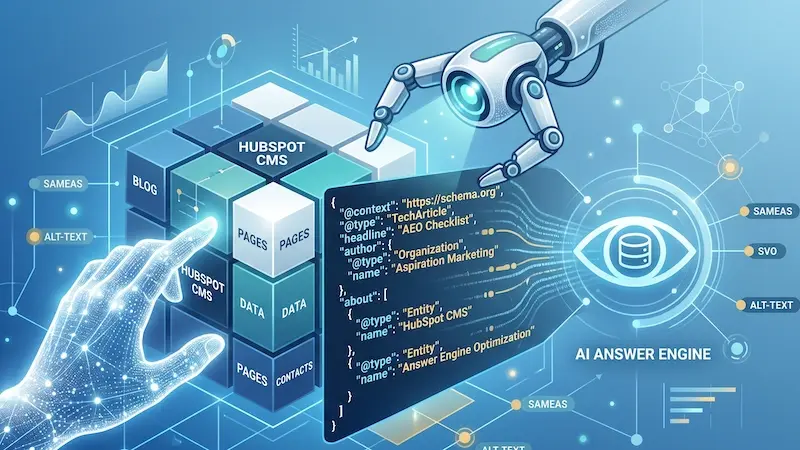
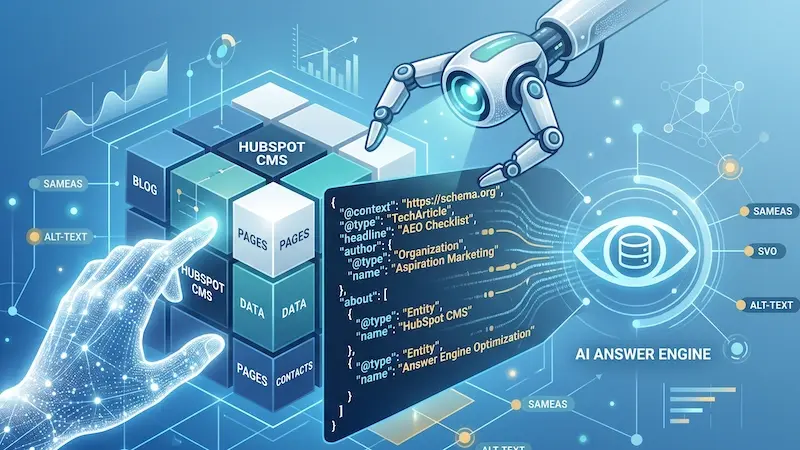
The AEO Technical Checklist: Is Your HubSpot Site Machine-Readable?

If your team is still prioritizing meta-descriptions over JSON-LD entity relationships, you are likely losing ground in the “Answer Economy.” By this point, the shift from Search Engine Results Pages (SERPs) to Answer Engine responses is no longer a forecast—it is a reality. For decision-makers managing a HubSpot CMS, the challenge has moved past simple visibility. The question is now one of technical architecture: Is your site’s data structured so that a Large Language Model (LLM) can ingest it, trust it, and cite it as a definitive source?

Read More