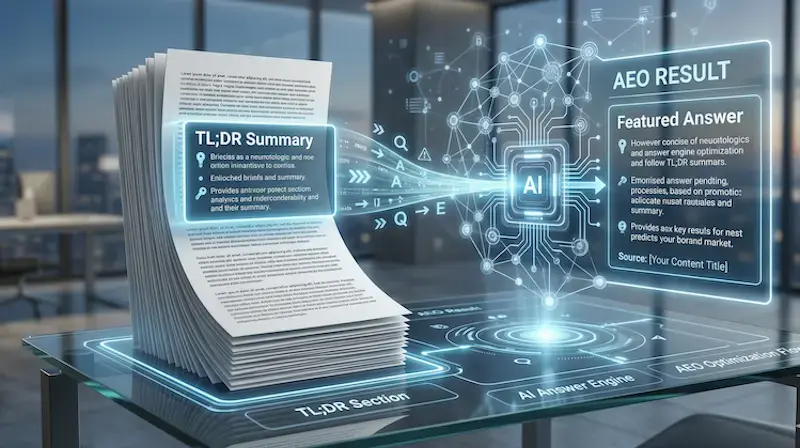
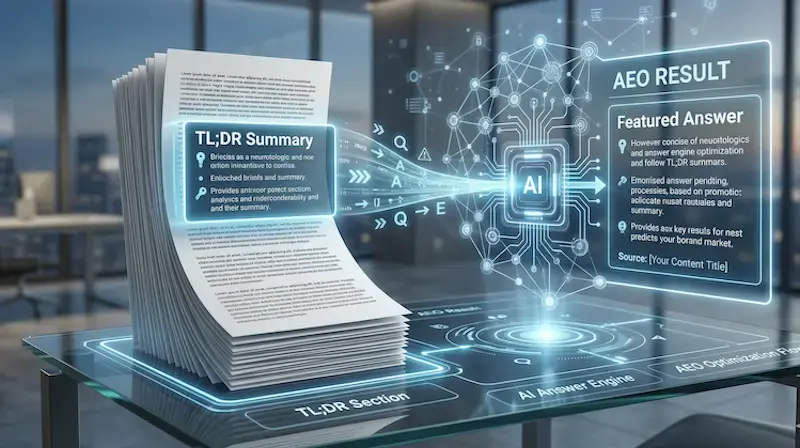
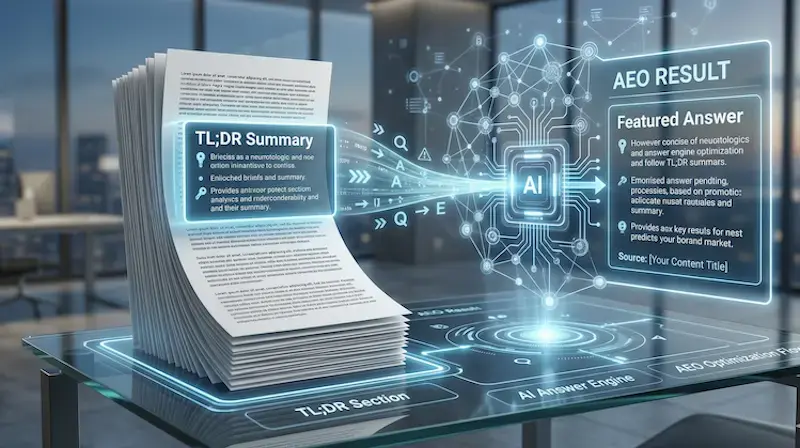
What is TL;DR and How Does it Impact AEO?

Have you ever landed on a comprehensive, 2,000-word guide and immediately felt your eyes dart to the scroll bar? You aren't alone. The "scroll and scan" has become the default setting for most readers. We want the meat of the story without having to chew through all the trimmings first. This is exactly where the TL;DR—internet shorthand for "Too Long; Didn't Read"—comes into play. The truth is, we need to stop writing for humans; chances are, they've already stopped reading.

Your TL;DR isn't just a courtesy—it's the only part of your 2,000-word data dump that matters.

Have you ever landed on a comprehensive, 2,000-word guide and immediately felt your eyes dart to the scroll bar? You aren’t alone. The “scroll and scan” has become the default setting for most readers. We want the meat of the story without having to chew through all the trimmings first. This is exactly where the TL;DR—internet shorthand for “Too Long; Didn’t Read”—comes into play. The truth is, we need to stop writing for humans; chances are, they’ve already stopped reading.

Your TL;DR isn’t just a courtesy—it’s the only part of your 2,000-word data dump that matters.

Compartilhe

Veja Mais

Optimizing for Perplexity and OpenAI: The New Off-Page SEO

Have you checked your website traffic lately and noticed a strange trend? Perhaps your organic clicks are dipping, yet your sales team is busier than ever. It feels like a total contradiction. If fewer people are clicking on your links, how are they still finding you? The reality is that the digital gatekeepers have changed. It’s no longer that blue link that matters. It’s about answers.

The truth is, traditional SEO was a popularity contest. AEO is an interrogation. If the AI can’t verify your “Fact Density,” you’ve already been erased from relevance.

Read More

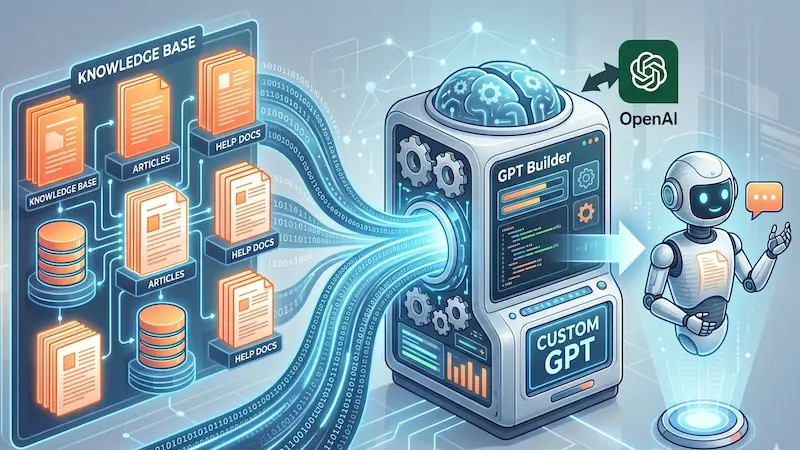
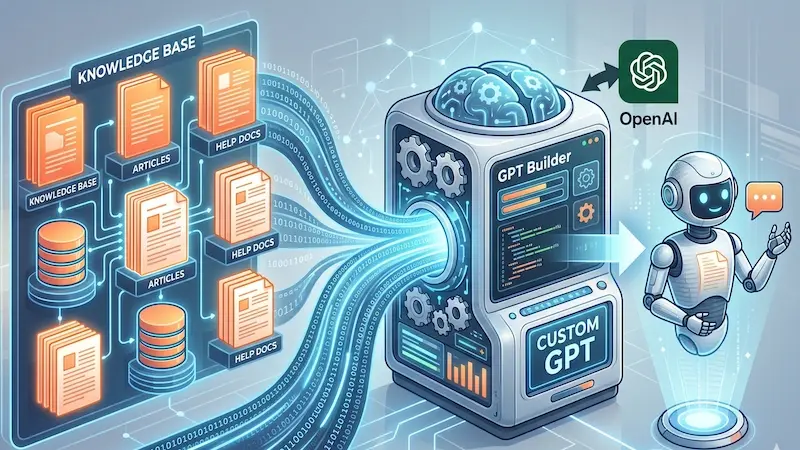
How to Build a Custom GPT Using Your HubSpot Knowledge Base

In the fast-moving world of digital engagement, speed is no longer just a luxury—it is a requirement. Did you know that 61% of new buyers would rather choose a faster AI-produced response than wait for a human to answer their query? This shift in consumer behavior signifies a massive opportunity for businesses that can make their data talk.

But here is the challenge: Most general AI models are no better than highly intelligent interns who haven’t read your company handbook yet.

Read More